
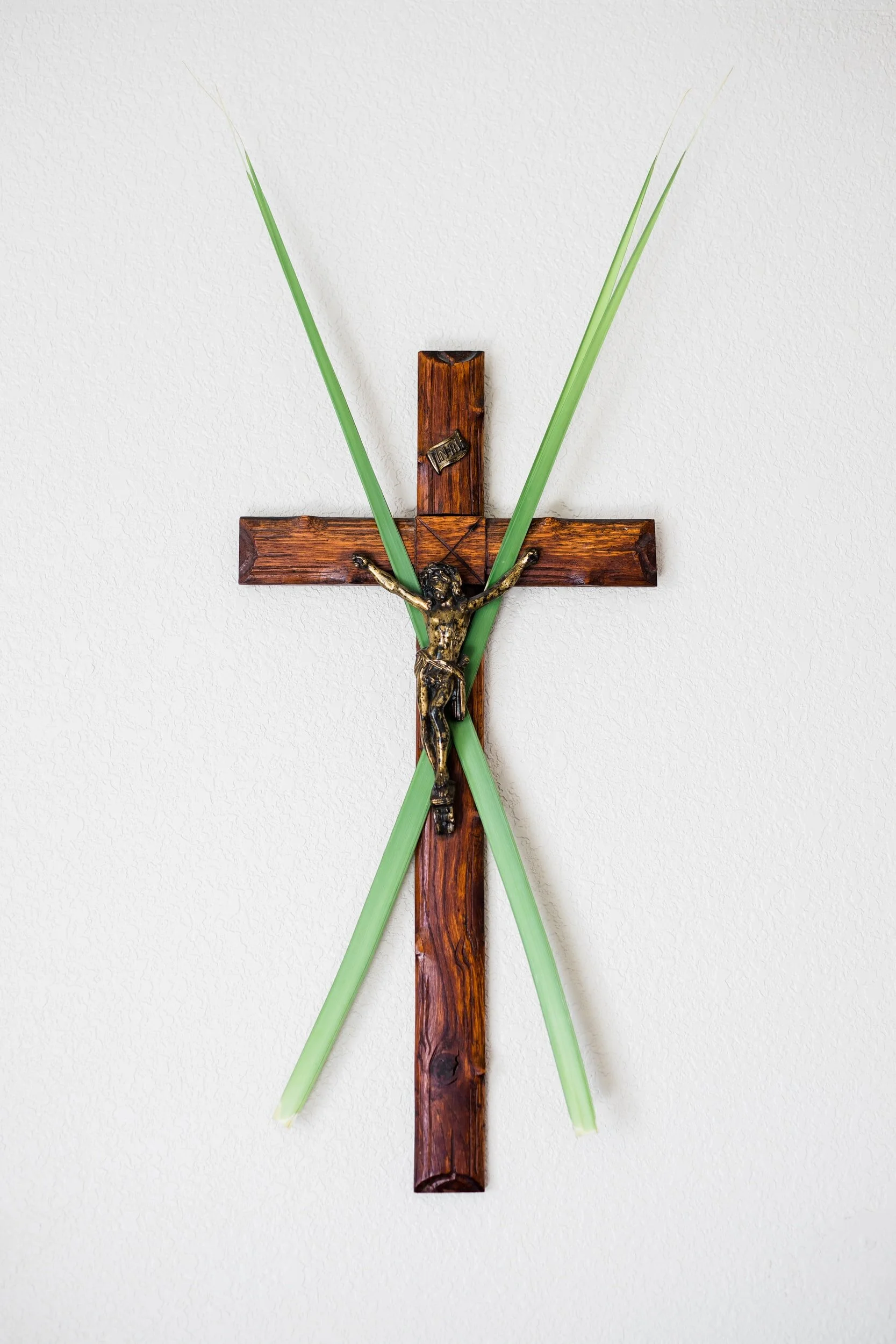
Choosing Your Lenten Practice
When you hear the word LENT, what do you think about? What feelings or emotions does the word Lent bring up for you?
Lent is the season of the Church Year 6 weeks between Ash Wednesday and Easter. Lent reminds us of Jesus’s 40 days in the wilderness after his baptism. The three traditional pillars of Lenten practice are prayer, fasting, and alms giving.
When I lived in Seattle, I used to joke that Lent was what you found in your belly button or your dryer, NOT a season of the Church Year. But when I moved to Cincinnati, everyone knew about Lent, they talked about it on the news and the local fast food restaurants advertised Lenten fish sandwiches on their signs. As a kid, my church had a Lenten Devotional each year, but no one really talked about why or what Lent meant. And we didn’t have an Ash Wednesday service that I remember.
Did you grow up with a Lenten practice or was it something your Catholic and Episcopal friends did but you didn’t know much about? Have you practiced Lent as an adult?
Maybe you grew up with a very strict view of Lent. Maybe you had to give up something or you had to fast meat on Fridays or fast something else you really liked like chocolate or dessert. Father Edward Hays says that fasting chocolate only makes you angry, it doesn’t help you draw closer to Jesus! I’d have to agree! It was Father Hays who introduced me to a new practice of Lent, looking at Lent as an opportunity to fall more in love with Jesus between now and Easter rather than having a “sack cloth and ashes” experience.
LENTEN PRACTICE IDEAS
What do you want your Lenten Journey to be like this year?
What is Jesus inviting you to focus on as you practice Lent this year? What do you need in your spiritual life as you begin Lent?
How can you grow closer to Jesus between now and Easter Sunday?
Here are some ways to view Lent this year. An Adventure, A Pilgrimage, A Fast, A Wilderness/Camping Experience, A Honeymoon, A Retreat. You might want to combine more than one. I’ve listed a few books that you might consider to use as a part of your Lenten practice. Author Suzanne Stabile asks the question ,”What is yours to do? What is yours not to do?” As you begin your Lenten Journey this year, ask Jesus what is yours to do. Don’t compare your journey to anyone else’s. You might not need to do anything this year for Lent. You might just need to rest. To actually put REST on your calendar and make that your Lenten Practice!
I have a LENTEN COLORING SHEET with these practices you can use to help you consider your Lenten practice/journey. Print it out, and as you color it, ask Jesus to inspire you as to the practice he is inviting you to try this year!
AN ADVENTURE:
This practice of Lent might include physical activity to get you outside or it might include creative activity that you’ve been putting off or neglecting. Where do you experience the love and presence of Jesus? When and how do you feel closest to God? That’s your Thinplace! This could this be your area of practice and focus this Lent. Or, do you need to experience something new with God? Trying the adventure of a silent retreat or a sabbath practice. Planning more fun and play with God. Perhaps learning something new with God, like reading a biography, learning about a new spiritual practice or even trying a new hobby that could help you connect more with God. Or, expanding your knowledge on issues of justice could be the adventure you and Jesus go on this Lent.
Sabbath as Resistance, New Edition with Study Guide by Walter Brueggemann
Practicing: Changing Yourself to Change the World by Kathy Escobar
Tattoos on the Heart: The Power of Boundless Compassion by Gregory Boyle
Thou Shalt Not Be a Jerk: A Christian’s Guide to Engaging Politics by Eugene Cho
A PILGRIMAGE:
The Practice of Pilgrimage involves seeing the gifts of the Journey. Most of us cannot travel to amazing places like a regular pilgrimage would involve, like to Iona, Ireland, or Spain. How can you do a pilgrimage in your own town? Discover places of significance… places of prayer, places of conflict, places of beauty and go see and take time to notice what God is doing there.
Take a photo pilgrimage through your past trips and journeys and remember what you learned and discovered about yourself and God, asking Jesus to show you new things from these trips and experiences. Do a photo pilgrimage in your town/city/daily life.
Remember that on pilgrimage, everything is a gift, from the crying babies to the lines you stand in and the interruptions and detours along the way. All are gifts!
A FAST:
Practice fasting from politics, news, whining, technology, social media, shopping, or anything getting in the way of your relationship with Jesus. Read Isaiah 58 for how God sees fasting.
Fasting: Spiritual Freedom Beyond Our Appetites by Lynne M. Baab
May It Be So: Forty Days with the Lord’s Prayer by Justin McRoberts
A WILDERNESS EXPERIENCE/CAMP OUT:
Practices might include hiking, camping, taking time out in nature and places of beauty.
Afoot and Lighthearted: A Journal for Mindful Walking by Bonnie Smith Whitehouse *
In God’s Creation: Devotions for the Outdoors by Barbara Baranowski
The Gift of Wonder: Creative Practices for Delighting in God by Christine Aroney-Sine
A HONEYMOON:
How can you fall more in love with Jesus between now and Easter? Honeymoons are times for the couple to focus on one another. Sometimes honeymoons are in beautiful places. Usually Honeymoons have lots of time to be alone and be together. What would a honeymoon with Jesus look like? What would it be like to focus on Jesus as your true love? How could you receive more of the love and acceptance of Jesus? How could you truly experience and know that you are God’s Beloved?
You Are the Beloved: Daily Meditations for Spiritual Living by Henri J. M. Nouwen
Life of the Beloved: Spiritual Living in a Secular World by Herni J.M. Nouwen
Lenten Hobo Honeymoon (Daily Reflections for the Journey of Lenten) by Edward Hays
A RETREAT:
We are all feeling exhausted and burned out due to the pandemic and everything else in our lives. A Retreat Practice might include Sabbath, Silence, and/or Journaling. You could plan actual times of “retreat” each week. Or, plan to go on a retreat during the course of Lent. Taking time for creative practices, long walks, bubble baths and times of prayer can all be a part of your Retreat Practice this Lent.
Sabbath Keeping: Finding Freedom in the Rhythms of Rest by Lynne M. Baab
Prayer: Forty Days of Practice by Justin McRoberts and Scott Erickson
The Cup of Our Life: A Guide to Spiritual Growth by Joyce Rupp
OTHER IDEAS for your Lenten Practice:
Learning about the Bible:
How to Read the Bible for All Its Worth: Fourth Edition by Gordon D. Fee
Healing GRIEF:
Broken Hallelujahs: Learning to Grieve the Big and Small Losses of Life by Beth Allen Slevcove
SERVING DURING A PANDEMIC… Showing God’s love in a practical way! Who in your life, your family, your neighborhood, or at work is in need of extra love, help, or compassion? What are some practical ways you can serve and give even in the middle of the pandemic? Ask Jesus to show you.
Take time to brainstorm with friends or family, make a list, pray about this.
MUSIC and ART:
Create a playlist for your Lenten practice
Play music as a part of your Lenten practice
Create a collage or other art piece as a part of your practice.
Watch the movie Chocolat with Jonny Depp and Juliet Binoche. This is a great movie set in the Season of Lent. You might host a discussion and contrast the Mayor and the Chocolate Maker.
Remember, the idea of a Lenten Practice is to help you draw closer to Jesus and fall more in love with him between now and Easter Sunday. I’m still praying about what my focus for Lent will be this year. Take some time this week to consider you journey and what is yours to do, or not do this Lent.

Sunday Meditations with Pastor Brian (Strength Conditioning)
ntense is the perfect description for the month of March 2020 in light of our new global realities, but this is not the first time the church or believers have gone through challenging times.
Intense is the perfect description for the month of March 2020 in light of our new global realities, but this is not the first time the church or believers have gone through challenging times. As we continue in our 2020 theme “Do not merely listen to the word, and so deceive yourselves. Do what it says…whoever looks intently into the perfect law that gives freedom and continues in it-not forgetting what they have heard but doing it—they will be blessed in what they do” James 1:22-25 NIV. In this Hope to Go message, “Strength Conditioning”, we travel back in the Old Testament for a powerful lesson on getting through tough times. Further, we’re reminded in “In Tense” times, it’s all about knowing, the past, the present and future-tense are all in God’s hands and what’s ahead is greater than what’s behind, but conditioning is not optional.
Thesis: “There are certain Kingdom muscles that can only be strengthened in specific seasons”.
In the New Testament, James 5:11 NLT, we have a summary of the book of Job, “We give great honor to those who endure under suffering. For instance, you know about Job, a man of great endurance. You can see how the Lord was kind to him at the end, for the Lord is full of tenderness and mercy”. That verse points out two Big Hope Points in the book of Job: 1. The patience of Job as an example for us from which we should learn and 2. that the book is not only about Job, but also about God; “You can see how the Lord was kind to him at the end, for the Lord is full of tenderness and mercy” James 5:11. That’s what we see in the last chapter of the book of Job. God is not thoughtless with His children; His purposes have an end and that is the restoration and blessing of His people. The Big Hope Truth: “In order to change your perspective, to a God perspective, you’ve got to overdose on truth”- Pastor B.
Four Things that are Restored to Job:
His Friendships Are Restored
In a way, this is Job’s final test, to pray for his three friends who’ve offended and vilified him and were miserable comforters. Job humbled himself and prayed. His natural leaning would be to stay offended and never forgive. But God freed Job from his natural and sinful self and tendencies through Job’s social-distancing. Job 42:1 tells us that God restored other friendships of Job as well.
His Fortunes Are Restored
The Israelites gave a double portion to their oldest son to indicate that he would be the family head and representative. Elisha received a double portion of the spirit of Elijah as a special mark of God’s grace and presence with him. Job receiving double of what he had before was an indication to him, his friends, and to us that God’s grace and favor rested on Job.
His Family is Restored
Job 42:13 says, “He also had seven sons and three daughters”. Remember that in one day Job had lost all ten of his children and soon after…his wife, in her grief, turned on Job and advised him to curse God and die. Now, we read in Job 42:13 that Job received 10 more children “seven sons and three daughters” the exact number that he had had before. The Big Hope Principle: Never Name Your Future by Your Present Circumstances!
His Future is Restored
Job saw, not only his grandchildren but his great-grandchildren and their children as well. Covenant blessings and joy were a part of what God restored to Job so that finally when he died, he could reflect on God’s goodness to him and rejoice with his children and grandchildren and their future blessing in their generations
Hope to Go…Strength - Conditioning Take Home Truth
Choose to be a Prisoner of Hope
Jesus died for us to live an abundant, fulfilling life (John 10:10), and hope is the confident, favorable expectation of this life. “Even today I declare That I will restore double to you”. Double for Your Trouble…Now I do realize everything that’s taking place but here’s the truth Isiah 53:1 “Who’s report will you believe.”
Claim Your Double Blessing
That's a promise for us all—a promise of double for your trouble! Double the blessing, double the joy, double the peace! Doesn't that inspire hope in your heart? Don’t allow a negative outlook spoil that for you!
Be Single-Minded About Your Double Blessing
This double-blessing promise isn't for the double-minded. When you walk it out in everyday life, there will be times when doubt, fear, unbelief, and weariness will come against you. It's in these times you will need to fight a good fight of faith. You will need to guard your mind against negativity about your situation. We must hold on to whatever God promises us and be confident that He is working in our situation no matter how things look, how we feel or what we think because hope releases the power of the Holy Spirit in these times. Ask the Holy Spirit to lead you. Line your will up with His and get excited about serving God. You could even be one who inspires others to become Prisoners of Hope!

Jesus’ Love Covers All-Abortion Recovery
Have you had an abortion and feel like you have never emotionally recovered from it? Are you unsure about how to go about recovering from the abortion? If you answered “yes,” you are not alone. Many women have the same experience and have never worked through the recovery process.
Note: This is not a discussion of the pros and cons of abortion. Both sides of the argument agree that grief after abortion is real and women must be given their voices back to process the grief.
Pro-choice woman: “Once a woman decides to have an abortion she has to try to cope with her experiences and her emotions on her own. I wish that women could share their stories openly without fear of being judged by society. Abortion is such a hot topic and there are many people shouting loudly on both sides of the argument. Sadly, the one voice you never hear, and perhaps the voice that is most important, is the woman who has had an abortion.”
Pro-life woman: “I might have found healing years earlier had I not been so terrified of the Church. Had I been able to address the pain emotionally, maybe then I would have been able to face the spiritual side of this.”
Have you had an abortion and feel like you have never emotionally recovered from it? Are you unsure about how to go about recovering from the abortion? If you answered “yes,” you are not alone. Many women have the same experience and have never worked through the recovery process. This selection of readings is meant to begin the journey or support an ongoing journey: https://herchoicetoheal.com/module-1/

Depression in Black Boys Begins Earlier Than You Think
From 2001 to 2015, the suicide risk for Black boys between the ages of 5 and 11 was two to three times higher than that of White boys, according to a new research letter in JAMA Pediatrics (Bridge, 2018). This concerning trend continues through adolescence as reported by the Nationwide Youth Risk Behavior Survey (Kann et al., 2017). The rates of attempted suicide, including attempts that resulted in an injury, poisoning, or overdose, are 1.2x higher among Black males compared to White males.
By Aaron Hunt, MS (Graduate Intern, APA Health Disparities Office) and David J. Robles, BA (Graduate Intern, SAMHSA Office of Behavioral Health Equity)
From 2001 to 2015, the suicide risk for Black boys between the ages of 5 and 11 was two to three times higher than that of White boys, according to a new research letter in JAMA Pediatrics (Bridge, 2018). This concerning trend continues through adolescence as reported by the Nationwide Youth Risk Behavior Survey (Kann et al., 2017). The rates of attempted suicide, including attempts that resulted in an injury, poisoning, or overdose, are 1.2x higher among Black males compared to White males.
These persistent trends are enrooted in life expectancy disparities that Black boys face. The APA Working Group on Health Disparities in Boys and Men recently released a new report on Health Disparities in Racial/Ethnic and Sexual Minority Boys and Men, which includes a review of research which may help to explain this increase in suicide in Black boys.
Recent national conversations on suicide have gone past the usual “reach out if you need help” messages to encouraging friends and family to reach out to individuals that they think might be suicidal or struggling with depression. This is undoubtedly important, but to do this, people need to know what depression looks like. According to the APA report, even professional health care providers have trouble detecting depression among racial/ethnic minority patients. Men from these groups are diagnosed with depression less often than non-Hispanic white males, and depression may also present itself differently in males as irritability, anger, and discouragement rather than hopelessness and helplessness.
The unique way that depression presents itself in males combined with the underdiagnoses of men of color with depression may intersect to cause further disparities for Black boys. The APA report discusses how Black boys are more likely to be viewed as older, less innocent, and more culpable than others—biased beliefs that may lead to harsher interventions in school starting as early as pre-kindergarten. In fact, Black boys are over three times more likely to be suspended from school than White students. These disparities combined with a lack of awareness about what depression looks like in men and boys of color may lead to social reprimand, school suspensions, and expulsion rather than to the mental health care that they need.
Young men of color are also more likely to be caught up in the school-to-prison pipeline as a result of these experiences. Black male high school students are also more likely to miss school due to feeling unsafe in their classroom environment or community, get in a physical fight in or outside the school setting, be a victim of sexual violence, and be a victim of physical dating violence (Kann et al., 2017). These risk factors remove what might otherwise be protective factors found in school or close social relationships.
There is clearly a need among national conversations of suicide for understanding how the role of masculinity, beliefs and social norms intersect to explain the disparities in health and well-being. As science advances there is a growing body of literature, but also a growing number of questions. Now is the time to leverage the tools and opportunities to make a difference and possibly save a life.
Although Black boys may face unique challenges, most racial/ethnic minority boys and men, as well as their families and communities, are resilient and seek positive growth and health.Having a greater sense of control over social and political forces, culturally responsive interventions, healthy cultural identities, and less rigid notions of masculinity show promise for helping racial/ethnic minority males become more resilient to depressive symptoms. Specifically, helping adolescents learn to display self-control over their emotions, talk with parents or friends, seek help, and have positive relationships with adults can help to build resiliency.
What can we do to reduce depression-related health disparities in boys and men of color?
Teachers should take continuing education courses on cultural bias and depression in Black boys to help address the problems they face in a school setting.
Clinicians need to stay up to date on best practices in working with racial/ethnic minority boys and men to make sure that they are not missing signs of mental illness.
Researchers should continue to study health disparities in boys and men of color as well as how resilience can be formed at a young age and strengthened through the life-course.
Community members should consider how to create protective factors for vulnerable boys in their communities (e.g. mentoring opportunities, after-school programs)
Policymakers should consider legislation, regulator, and administrative actions for vulnerable boys, and seek to remove systemic structures that marginalize boys and men of color (e.g. disparities in school discipline, school-to-prison pipeline).
Everyone can work together to eliminate the persistent exposure to implicit biases and microaggressions in settings where boys and men of color live, learn, work, play, and seek healthcare.
For information on how to promote the behavioral health of boys and men of color and how to use prevention research to guide practice:
Data-Related Tools and Resources for Boys and Young Men of Color (SAMHSA Ensuring the Well-being of Boys and Young Men of Color)
Programs Designed for and/or Evaluated with Youth of Color (PLAAY Preventing Long-term Anger and Aggression in Youth; Shape Up! Barbers Building Better Brothers)
APA’s Building Blocks for Preschool Success (http://www.apa.org/pi/health-disparities/resources/education/default.aspx)

Revival Prayers: Digging Deeper
The following are Scripture prayers that you can use to plead with God for revival. These requests are based on the Word of God and are the revealed will of God for the church. Plead these Scripture prayers with confidence and persistence. As always, begin by praying for yourself and then move to interceding for the other believers concerning revival.
The following are Scripture prayers that you can use to plead with God for revival. These requests are based on the Word of God and are the revealed will of God for the church. Plead these Scripture prayers with confidence and persistence. As always, begin by praying for yourself and then move to interceding for the other believers concerning revival.
O God, revive the believers of _________________________ Church so that we may rejoice in You (Psalm 85:6)
Restore, O God, the believers of _______________________ Church; make Your face to shine on us that we may be delivered from our backsliding (Psalm 80:7).
Rise up and help the believers of ________________________ Church; restore us to Yourself because of Your redeeming love (Psalm 44:8).
Father, grant a spirit of brokenness and repentance to the believers of ____________________ Church (Isaiah 57:15).
Living God, give the believers of________________________ Church a fresh and powerful vision of Your holiness (Isaiah 6).
Almighty God, create in the believers of__________________________ Church a clean heart and renew a steadfast spirit within us (Psalm 51:1).
O Lord, do not take away the sense of Your presence from us and do not take away Your Holy Spirit from us (Psalm 51:11; Revelation 2:5).
Holy God, cause the believers of _______________________Church to acknowledge our transgressions and to see that our sins are ever before You (Psalm 51:3).
Father, cause the believers of __________________________Church to be receptive to and responsive to Your holy Word (Nehemiah 8:8-9).
Father, cause the believers of __________________________ Church to be broken and humble, trembling at Your Word (Isaiah 66:2).
Lord God, cause the believers of _______________________ Church to call on Your name and to stir ourselves to lay hold of You (Isaiah 64:7).
Father, stir the believers of ____________________ ________ Church to remove anything from our lives or church that would hinder our experience of revival (Luke 3:4-6).
God, convict the believers of ___________________________ Church of any unforgiveness and bitterness. Give us no joy, peace, or rest until this is dealt with (Ephesians 4:30-32).
Father, as the deer thirsts for the streams of water, so cause the believers of __________________ Church to thirst for You (Psalm 42:1-2).
Lord, I plead that the Holy Spirit will work powerfully among the believers of ________________________ Church (John 16:7).
Revive us, O God, that the believers of _____________________Church will obey Your holy Word (Psalm 119:88). O Lord, heal our backsliding; love us freely; turn Your anger away from us (Hosea 14:4).
Though our sins testify against us, restore the believers of ___________________ Church for Your great name's sake (Jeremiah 14:7).
Father, I plead that You will convict and save those who belong to this church who have been deceived about true salvation and are actually lost. Have mercy on them and save them (Matthew 23:27-28)!
Lord Jesus, enable the believers of _______________________ Church to return to You as our first love (Revelation 2:4).
Father, convict the believers of ________________________ Church of the sin of compromise. Cause us to hate this sin and to deal immediately with it (Revelation 2-3).
Lord Jesus, break the believers of ______________________ Church from a spirit of self-sufficiency and grant us a spirit of dependence on You (Revelation 2:17).
Father, I plead that You will create a spirit of praise among the believers of __________________ Church (Psalm 150). Father, enable us to deal with anything in our lives and our church that we have placed above You (Exodus 20:1-2).
Have mercy on the believers of ________________________ Church and restore us to a right relationship to Yourself (Psalm 51).
O God, grant the believers of __________________ Church a burden for lost souls (Romans 10:1).
Father, create within the believers of ______________________ Church a spirit of prayer and fasting (Colossians 4:2).
Lord, reveal to the believers of _________________________ Church what is not pleasing in Your sight. Give us an unceasing burden about these things until they are dealt with (Psalm 139:23).
O God, cause Your people of __________________________ Church to love You with all their heart, soul, mind, and strength (Matthew 22:37-38).
Father, cause Your people of ___________________________ Church to love each other with all their heart, soul, mind, and strength (Matthew 22:39).

Revival Prayers
The following are Scripture prayers and ideas to help you seek God for revival. These are some suggestions on how you and your church can seek God for revival. These suggestions are offered to you to help you plead with God for genuine revival in your church and across the nation. I want to emphasize that these suggestions are not magical formulas. They are simply ways that you can seek God for revival. Revival comes from God. Receiving revival calls for believers to seek God with faith and with the Word of God.
The following are Scripture prayers and ideas to help you seek God for revival. These are some suggestions on how you and your church can seek God for revival. These suggestions are offered to you to help you plead with God for genuine revival in your church and across the nation. I want to emphasize that these suggestions are not magical formulas. They are simply ways that you can seek God for revival. Revival comes from God. Receiving revival calls for believers to seek God with faith and with the Word of God.
These are suggested starting points for your intercession concerning revival in your church and the nation. You can use these suggestions, add more to them, or you can develop your own prayer requests and reasons from these. As you pray for revival, be sensitive to the Holy Spirit's leadership. He may give you insights on how to pray for revival in your particular church. He also may give you more Scripture to pray through concerning revival. As you pray through these requests, start with yourself. Ask God to do these things in your life. Plead with Him for a fresh work of His grace and His power. (feel free to print out this form to use during your prayer time)
Pray that God will create a spirit of humility and brokenness among the believers (Isaiah 57:15; James 4:6). God will not revive those who are self-sufficient and proud. The believers must come to see their spiritual bankruptcy and utter dependence on God.
Pray that God would grant believers a deeper understanding and awareness of His holiness (Isaiah 6:1-5; 1 Peter 15- 16). The holiness of God is a neglected subject in the church today. Yet, it is essential to revival. We need to understand that God is utterly holy. He does not and cannot sin. He is not tempted nor is He tempted. He is pure and without the stain of sin. He always does what is right and good. Pray that believers would be gripped by the absolute holiness of God.
Ask God to reveal to believers the depth and the evil of their sin. Call on the Holy Spirit to move them to confess and repent of their sin (Psalm 19:12-14; 1 John 1:9). The Holy Spirit is grieved when a believer cherishes sin and does not confess and repent of it (Psalm 66:18; Ephesians 4:30). When the Holy Spirit is grieved, He will not release His miraculous, life-transforming power into our midst. Sin has to be dealt with by believers. Believers must be honest about their sin and must come clean with God about these things.
Plead with God to grant the believers a hunger for the Word of God and a readiness to obey the Word of God (Psalm 119:97, 103; 1 John 2:3-6). Plead with the Holy Spirit to stir within every believer a desire to search and to know the Word of God. Ask Him to remove any complacency toward the Word of God by the believers. Call on Him to stir the believers to be doers of the Word and not simply hearers of the Word (James 1:22-24).
Ask God to reveal any obstacles that could hinder your church from experiencing genuine revival. Then pray for its removal (Psalm 139:23). Pray that God will reveal anything that is not pleasing to Him in your church. Call on Him to deal with these obstacles. Plead with Him to remove anything that is hindering the church to experience a genuine working of the Holy Spirit in revival.
Pray that your pastor will preach the Word of God with power, conviction, and authority (1 Corinthians 2:1-4; 2 Timothy 3:16-4:4). Revival usually comes when God gives His people bold, faithful, and fearless preachers of the Word of God. True and powerful preaching of the Word of God is used by God to revive His people. Plead that your pastor will powerfully preach the Word of God. Pray that He will proclaim the fundamental truths of the faith with great clarity, conviction, and power.
Ask God to deal with any unforgiveness or bitterness among the believers of the church (Ephesians 4:30-32). Unconfessed sin grieves the Holy Spirit. Yet, in the context of Ephesians 4, the emphasis on right relationships in the church. When believers are at odds with each other, the Spirit is grieved. Nothing quenches the presence and the power of the Holy Spirit like broken relationships among believers. Pray that the broken relationships among believers would be healed. Ask Jesus Christ to bind Satan's work through the broken relationships (Ephesians 4:27). Call on God to deal with the unforgiveness or bitterness that is grieving the Holy Spirit.
Plead that God would convict and save any deceived, unregenerate church members (Matthew 7:21-23; 2 Corinthians 13:5-6). There are times when deceived, unregenerate church members work against what God is doing in the church. They cause believers to stumble. Plead that God would deal with any members who may be deceived and are not truly saved. Call on God to strip their hope in themselves and reveal to them the truth of the gospel of Jesus Christ.
Call on God to convict believers that they must give an account of their lives at the judgment seat of Jesus Christ (2 Corinthians 5:9-10). Believers need to realize that they must give an account to God for their lives. There will be a day of judgment for the believer. Believers need to be gripped and motivated by the fact that they will give account to the Lord Jesus Christ one day. Pray that believers will realize this and remember this.
Pray that God will grant the believers an agonizing burden for lost people and an unceasing desire to share the gospel with them (Matthew 28:18-20; 2 Corinthians 5:10; Romans 9:1-3). Call on God to create within believers a burden to pray for and share the gospel of Jesus Christ with lost people. Plead with Him to grant this to every believer.
Plead that God will give the believers a deeper love for the Lord Jesus Christ (1 John 4:1-3). The Spirit of God enables people to confess that Jesus Christ is the Son of God. Revival is a powerful work of the Holy Spirit in which He draws believers closer to the Lord Jesus Christ. In revival, he leads believers to love and to confess Jesus Christ in a deeper, more faithful way than at other times. Pray that the Holy Spirit will deepen the believers' love for and confession of Jesus Christ, the Son of God, the Lord and Savior.

Dealing With Your Idols
In 1 John 5:21, the apostle John warns believers to keep themselves from idols. An idol is anything or anybody that you love more than God. It is anything or anybody in your life that receives greater priority in your life than God. This verse reveals that Christians are in danger of allowing things and people to become more important, to receive a greater priority in our lives, than God.
In 1 John 5:21, the apostle John warns believers to keep themselves from idols. An idol is anything or anybody that you love more than God. It is anything or anybody in your life that receives greater priority in your life than God. This verse reveals that Christians are in danger of allowing things and people to become more important, to receive a greater priority in our lives, than God.
If the people of God are going to experience revival, our idols must be put away (1 Samuel 7:3). In order to return to the Lord and experience revival, you must deal with those things that receive a greater priority in your life than your relationship to God. The following prayer requests are offered to help you identify the idols in your life and then deal with them. These prayers are based on the Word of God and focus on the idolatrous loves that God despises and condemns. Your idolatry must be confessed and repented of. You can begin this process with the following prayer. Then you can pray through the other requests. Ask the Holy Spirit to reveal any idols that you have built in your life. Plead with Him to enable You to deal with these idolatrous loves and to remove them from your life. Pray that other believers will deal with the idols in their lives.
"Father, You have declared that I am to love You first of all, best of all, and most of all. You have said in Matthew 22:37-38 that I am to love You with my entire being. This is Your Word. This is Your desire and command for me. I plead with You to grant me the grace and power to do this. Reveal to me the idols that I have erected in my life. Show me anything that I love more than You--anything that I have made a higher priority than You. I pray that Your Holy Spirit would convict me deeply and powerfully concerning the idols in my life. Enable me to deal with them. Amen."
Love of money: I pray that I would not love money more than You and that I would not have a sinful longing for it. Do not allow my pursuit of money to be greater or more important to me than my pursuit of knowing, loving, and obeying You (1 Timothy 6:10).
Love of self: I plead that I would not love myself more than You, Father. Deliver me from being self-centered and grant me the power and strength to deny myself (2 Timothy 3:2).
Love of approval: Father, I pray that I will love and seek Your approval above the approval of men. Cause me to pursue a lifestyle of pleasing You rather than men (John 12:42).
Love of power or control: Father, enable me to overcome the desire for power. I plead that You will create in me a servant's heart and willing to serve others (3 John 9:10).
Love of pleasure: I plead that I will not love pleasure more than You. Cause me to find my greatest delight and pleasure in You (2 Timothy 3:4).
Love of food: Father, I want You to be my God and not my stomach. Cause me to have the proper perspective when it comes to food (Proverbs 21:17)
Love of sleep: Enable me to get the proper rest, but deliver me from indulging in too much sleep and laziness (Proverbs 20:13).
Love of darkness (sin): I pray that I would not love my sin more than You. Cause me to hate sin and to love You with all my being (John 3:19).
Love of simplicity: Father, I ask that I would not prefer my own wisdom above Your Word (Proverbs 1:22).
Love of cursing: I pray that I would not love speaking profanity and filth above speaking words of love and encouragement (Psalm 109:17).
Love of abundance: I ask that the pursuit of my life would not be gaining material possessions. I ask that You would grant me the grace and power to love You and pursue You above all else (Ecclesiastes 5:10).
Love of the things of the world: Father, do not allow me to love the attitudes and actions of this world above You. Deliver me from the lust of the flesh and eyes and the pride of life. Cause me to love You and Your Word more than this world (1 John 2:15).

Why We Must Put an End to the Stigma of Mental Illness
It’s a fact of life that’s not only clear from the pages of the Bible but also from the practical reality of what we see around us and in our own lives. Our bodies are broken. Our emotions are broken. Guess what? Our minds are broken, too.
Everyone is broken.
It’s a fact of life that’s not only clear from the pages of the Bible but also from the practical reality of what we see around us and in our own lives. Our bodies are broken. Our emotions are broken. Guess what? Our minds are broken, too.
If your liver stops working, you can go to a doctor to get it fixed. If you have a broken bone, you can get it set.
We don’t look down at people who get sick. We don’t second-guess the fact that they need medicine. We don’t tell them they need to pray harder.
But what do we say to people with mental health challenges?
We’ve stigmatized mental health for far too long. But the truth is, your brain is just another organ. It’s not a sin to be sick. Your character isn’t defined by your chemistry. Your identity is not your illness.
According to the National Alliance on Mental Illness, 1 in 5 Americans experiences mental illness, and nearly 10 million Americans live with a serious mental illness.
Every single one of us knows someone with a mental illness.
Yet, for some reason, the stigma surrounding mental illness is profoundly and deeply ingrained in our culture. It’s even in our churches.
Stigmatizing mental illness isn’t just unkind. It can be lethal. Many people believe they have to hide their mental illnesses from their church families, who should be loving and accepting of them. That just makes the problem worse. It leads to despair.
So what can we do about this awful stigma?
1. We can constantly tell the stories of how God is using people with mental illnesses. Many of you know that my son Matthew struggled with mental illness for 27 years before he lost his battle in 2013. I received probably 35,000 letters of condolences after his passing. Honestly, it was quite overwhelming. But of all the letters I received, it wasn’t any from kings, queens, and presidents that meant the most to me. The most meaningful letters came from people Matthew led to Christ. People would tell me, “I’m going to be in heaven because your son told me about Jesus.” I remember getting those letters and then writing in my journal, “In God’s garden, even broken trees bear fruit.” If God only used perfect people, nothing would ever get done. God uses all of us in spite of our struggles. To end the stigma of mental illness, we must constantly tell the story of people with mental illnesses whom God is using. I have them in my church. You have them in yours. Let’s tell people their stories.
2. As leaders, we must be honest about our own mental health challenges. We struggle with mental health just like anyone else. Becoming a leader certainly doesn’t insulate you from depression, anxiety, or any other mental health challenges. Honestly, I was depressed my entire second year as pastor of Saddleback Church. My goal wasn’t, “God, build a great church.” My goal was, “God, get me through Sunday.” But I never gave up. More importantly, God didn’t give up on me. God used that time in my life as a leader. Some of the most significant developments of my ministry at Saddleback can be traced back to that period. God never wastes a hurt. Leaders should never shy away from showing people this truth. When leaders begin to show their own frailty with mental illness—and how God has used their struggles to make them better—it’ll wipe out the stigma.
3. We need to provide a safe place for people to talk about their mental health challenges. This is how Celebrate Recovery® can play a huge role in eliminating the stigma of mental illness. At Celebrate Recovery you know how to provide a safe place for people to openly share about their struggles. You do it every week. When people come to CR, they’re not identified by their habit. They identify with Jesus. The same needs to happen with mental illness. The people who come to your church with a mental illness shouldn’t be defined by it, either. In Celebrate Recovery, you have an opportunity to lead the way in providing a safe place for those with mental illness. As you model this behavior to other areas of your church, this dangerous stigma will fall.
It’s time for us to end the stigma of mental health. It’s time for the church to take the lead in helping people with mental illnesses. Jesus cared about the mental health of people. He ministered to those with mental illnesses.
If Jesus thought it was important to minister to those with mental illnesses, shouldn’t we do whatever we can to end the mental health stigma in our churches so we can be the hands and feet of Jesus in our community today?

Why Must We Be Reconciled to God?
Those reconciled to God through faith in Christ's sacrifice must continue living in the faith—that is, in harmony with the fundamental beliefs taught from all of God's Word.
How has sin affected our relationship with God?
“Behold, the LORD’s hand is not shortened, that it cannot save; nor His ear heavy, that it cannot hear. But your iniquities have separated you from your God; and your sins have hidden His face from you, so that He will not hear” (Isaiah 59:1-2).
What is the solution to our alienation from God?
“Seek the LORD while He may be found, call upon Him while He is near. Let the wicked forsake his way, and the unrighteous man his thoughts; let him return to the LORD, and He will have mercy on him; and to our God, for He will abundantly pardon” (Isaiah 55:6-7).
How can we be reconciled to God?
“Much more then, having now been justified by His blood, we shall be saved from wrath through Him. For if when we were enemies we were reconciled to God through the death of His Son, much more, having been reconciled, we shall be saved by His life. And not only that, but we also rejoice in God through our Lord Jesus Christ, through whom we have now received the reconciliation” (Romans 5:9-11; compare 2 Corinthians 5:18-20).
Does God expect us to strive to be blameless after our reconciliation to Him?
“And you, who once were alienated and enemies in your mind by wicked works, yet now He has reconciled in the body of His flesh through death, to present you holy, and blameless, and above reproach in His sight; if indeed you continue in the faith, grounded and steadfast, and are not moved away from the hope of the gospel which you heard …”(Colossians 1:21-23).
Those reconciled to God through faith in Christ’s sacrifice must continue living “in the faith “—that is, in harmony with the fundamental beliefs taught from all of God’s Word (Matthew 4:4).
What sins are covered by Christ’s blood?
“They [believers] are now justified by his grace as a gift, through the redemption that is in Christ Jesus, whom God put forward as a sacrifice of atonement by his blood, effective through faith. He did this to show his righteousness, because in his divine forbearance he had passed over the sins previously committed” (Romans 3:24-25, NRSV).
At our baptism God forgives our past sins—”sins previously committed”—that we have repented of and stopped practicing. But His grace and mercy never give us permission to continue sinning. Notice how Paul began his explanation of baptism: “What shall we say then? Shall we continue in sin that grace may abound? Certainly not! How shall we who died to sin live any longer in it?” (Romans 6:1-2).
Christ died to pay for our sins and lead us to repentance. He never intended that we misconstrue grace and forgiveness as permission to ignore the core teachings that God revealed through the Scriptures before He was even born. Instead He taught, as we have already read, that “man shall not live by bread alone, but by every word of God” (Luke 4:4).
Why do we need God’s grace?
“For by grace you have been saved through faith, and that not of yourselves; it is the gift of God, not of works, lest anyone should boast. For we are His workmanship, created in Christ Jesus for good works, which God prepared beforehand that we should walk in them”(Ephesians 2:8-10).
Nothing we do can earn us forgiveness and salvation. Both are gifts from God. “For God so loved the world that He gave His only begotten Son, that whoever believes in Him should not perish but have everlasting life. For God did not send His Son into the world to condemn the world, but that the world through Him might be saved . He who believes in Him is not condemned; but he who does not believe is condemned already, because he has not believed in the name of the only begotten Son of God” (John 3:16-18).
Is faith in God’s grace through Christ’s sacrifice necessary for forgiveness?
“… You were … buried with Him in baptism, in which you also were raised with Him through faith in the working of God , who raised Him from the dead. And you, being dead in your trespasses and the uncircumcision of your flesh, He has made alive together with Him, having forgiven you all trespasses” (Colossians 2:11-13).
“Therefore we also pray always for you that our God would count you worthy of this calling, and fulfill all the good pleasure of His goodness and the work of faith with power, that the name of our Lord Jesus Christ may be glorified in you, and you in Him, according to the grace of our God and the Lord Jesus Christ” (2 Thessalonians 1:11-12).
Should our faith in God’s forgiveness affect our conscience?
“Therefore, brethren, having boldness to enter the Holiest by the blood of Jesus, by a new and living way which He consecrated for us, through the veil, that is, His flesh, and having a High Priest over the house of God, let us draw near with a true heart in full assurance of faith, having our hearts sprinkled from an evil conscience and our bodies washed with pure water” (Hebrews 10:19-22).
Once our “old man” is buried through baptism, God wants us to put behind us all feelings of guilt over past sins. He wants us to approach our future with confidence that our sins have been forgiven by Him. We are to begin a new life without fretting over the past.
Paul describes the attitude of a clear conscience God wants for us. “Brethren, I do not count myself to have apprehended; but one thing I do, forgetting those things which are behind and reaching forward to those things which are ahead, I press toward the goal for the prize of the upward call of God in Christ Jesus. Therefore let us, as many as are mature, have this mind …” (Philippians 3:13-15).